A leadership page is not a biography. It is a trust signal.
A Leadership Page Is Not a Biography. It Is a Trust Signal.
A leadership page is often treated as a place to list credentials: experience, education, board seats, awards, functional expertise and career history. All of it matters, but at executive level, credibility is not built by information alone. Before a biography is read, the page has already communicated something. It has either created confidence or introduced hesitation. It has either made leadership feel clear, aligned and trusted or left the audience to interpret the organization without a standard.
A leadership page is not simply a record of who leads. It is a trust environment.
Leadership Is Read Before It Is Explained
Senior stakeholders do not wait for every paragraph before forming an impression. Investors scan. Boards assess. Partners compare. Media interpret. Employees absorb signals of stability before reading the full message. At this level, perception is compressed and the leadership page must carry meaning quickly.
The image, order, spacing, hierarchy, restraint and tone all contribute to that meaning. These are not aesthetic details. They are leadership signals. A page can contain exceptional credentials and still feel visually uncertain. It can explain capability and still fail to communicate authority. It can present impressive people and still leave the leadership system feeling ungoverned. The issue is rarely the leader. The issue is the standard around how leadership is presented.
The Leadership Page Should Create Immediate Confidence
A biography is designed to inform. A leadership page should do more. It should make authority legible, clarify role, establish trust and make the organization feel composed before the reader begins evaluating details. The strongest leadership pages do not overwhelm the audience with proof. They create a controlled environment where proof can be received with confidence.
That requires more than uploading executive images and placing bios in sequence. It requires structure. Who is positioned first? How is authority made visible? Are the visuals consistent? Does each leader carry the right level of presence? Does the page reflect the company’s maturity? Does the leadership system feel aligned? These questions shape trust faster than most organizations realize.
Executive Visibility Cannot Be Left to Individual Choice
In many companies, leadership visuals are handled as separate decisions. One executive submits a formal image. Another submits something casual. One biography is concise. Another is dense. One leader appears highly positioned. Another appears disconnected from the company standard. Individually, each choice may seem acceptable. Together, they create a signal.
The audience may not name the inconsistency, but they feel it. The page begins to look collected rather than governed. The leadership team appears present, but not aligned. At executive level, that distinction matters. Leadership visibility should not depend on what each person happens to provide. It should be structured through a standard that reflects the company’s trust, hierarchy and ambition.
Trust Is Built Through Silent Indicators
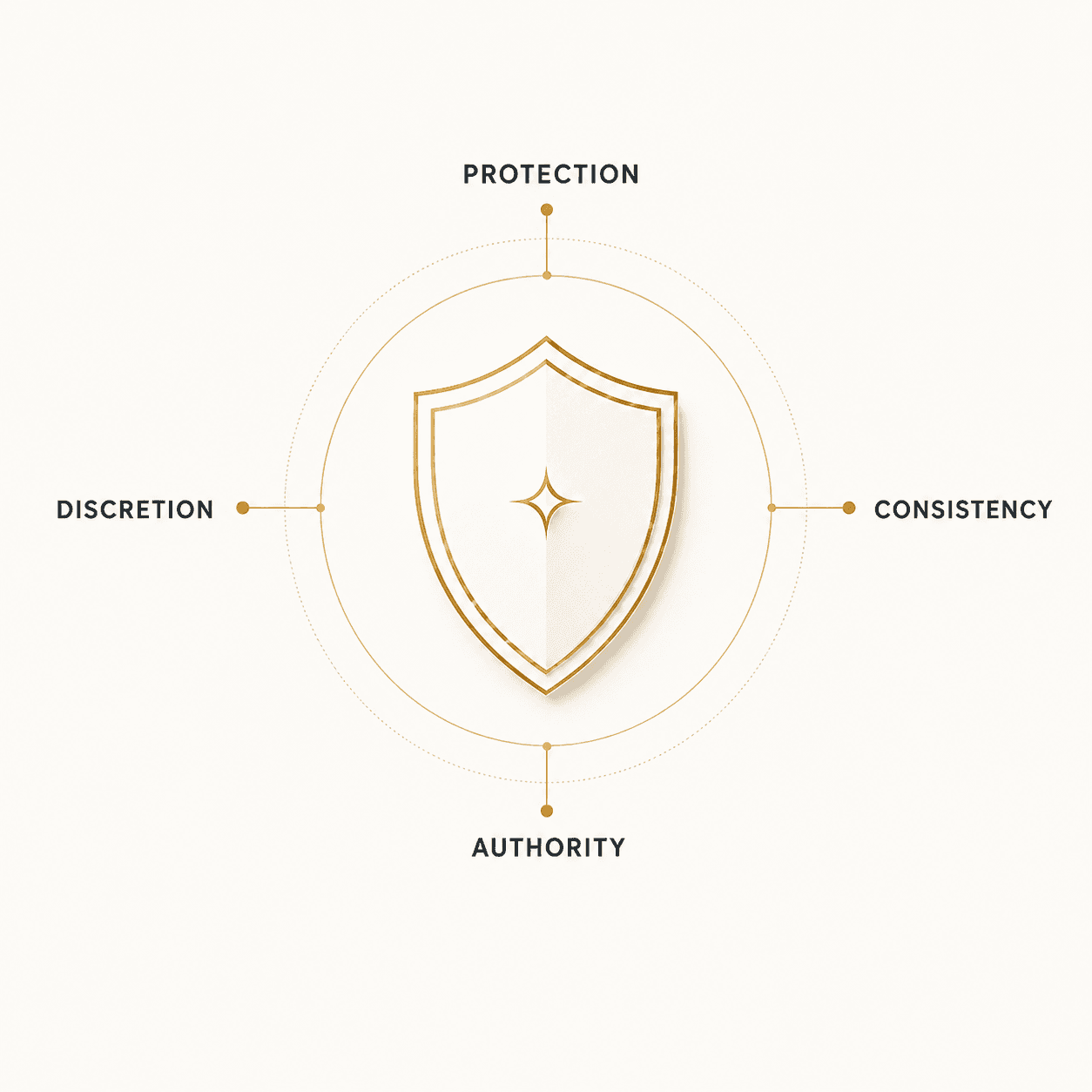
The most effective leadership pages understand the value of restraint. They do not over-explain authority, crowd the page with excessive proof, rely on design alone to create polish or flatten every leader into the same visual signal. They use quiet indicators with precision: image restraint, role clarity, visual hierarchy, consistent treatment, controlled spacing, aligned tone and disciplined sequencing.
These elements shape whether leadership feels established. When they work together, the page communicates confidence before explanation begins. The organization feels mature. The leadership system feels intentional. The viewer understands that what they are seeing has been considered. When they do not, the page may still look professional, but it does not necessarily create trust.
Hierarchy Should Be Visible Without Being Overstated
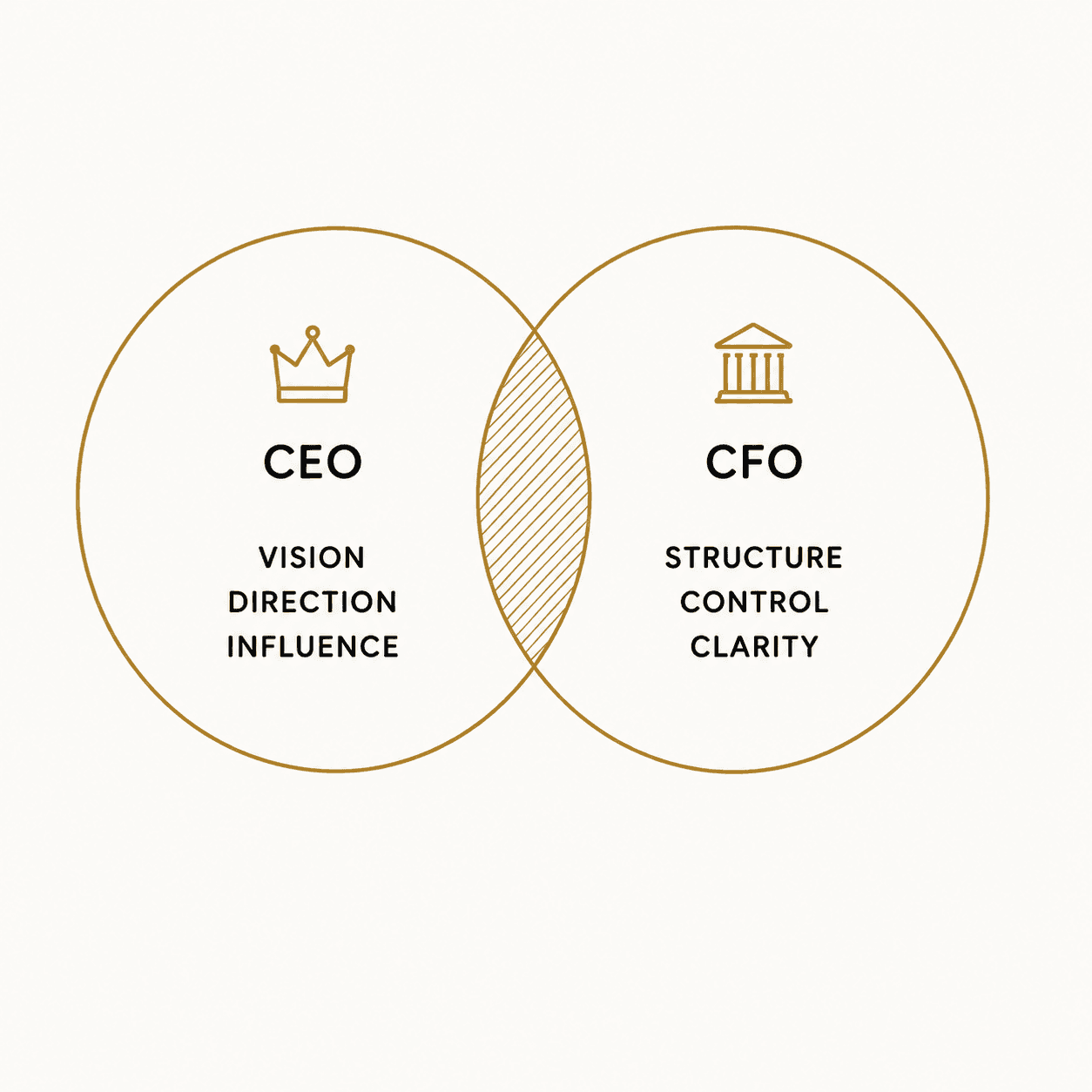
A strong leadership page does not treat every role as visually identical. The CEO, founder, CFO, board member, operating executive and advisor may all belong to the same leadership ecosystem, but they do not carry the same signal. Some roles carry vision. Some carry control. Some carry stewardship. Some carry continuity. Some carry institutional confidence. Some carry the future direction of the company.
The leadership page should help the audience understand this without needing a long explanation. That is the purpose of visual hierarchy. Not ego. Not status. Not overstatement. Clarity. When hierarchy is governed, the leadership page becomes easier to read. The audience understands who leads, who supports, who governs and who represents the company’s authority in the market. When hierarchy is ignored, the page becomes visually flat. Everyone appears present, but the structure of leadership is less clear. At senior level, unclear structure weakens confidence.
The Page Should Reflect the Standard of the Company
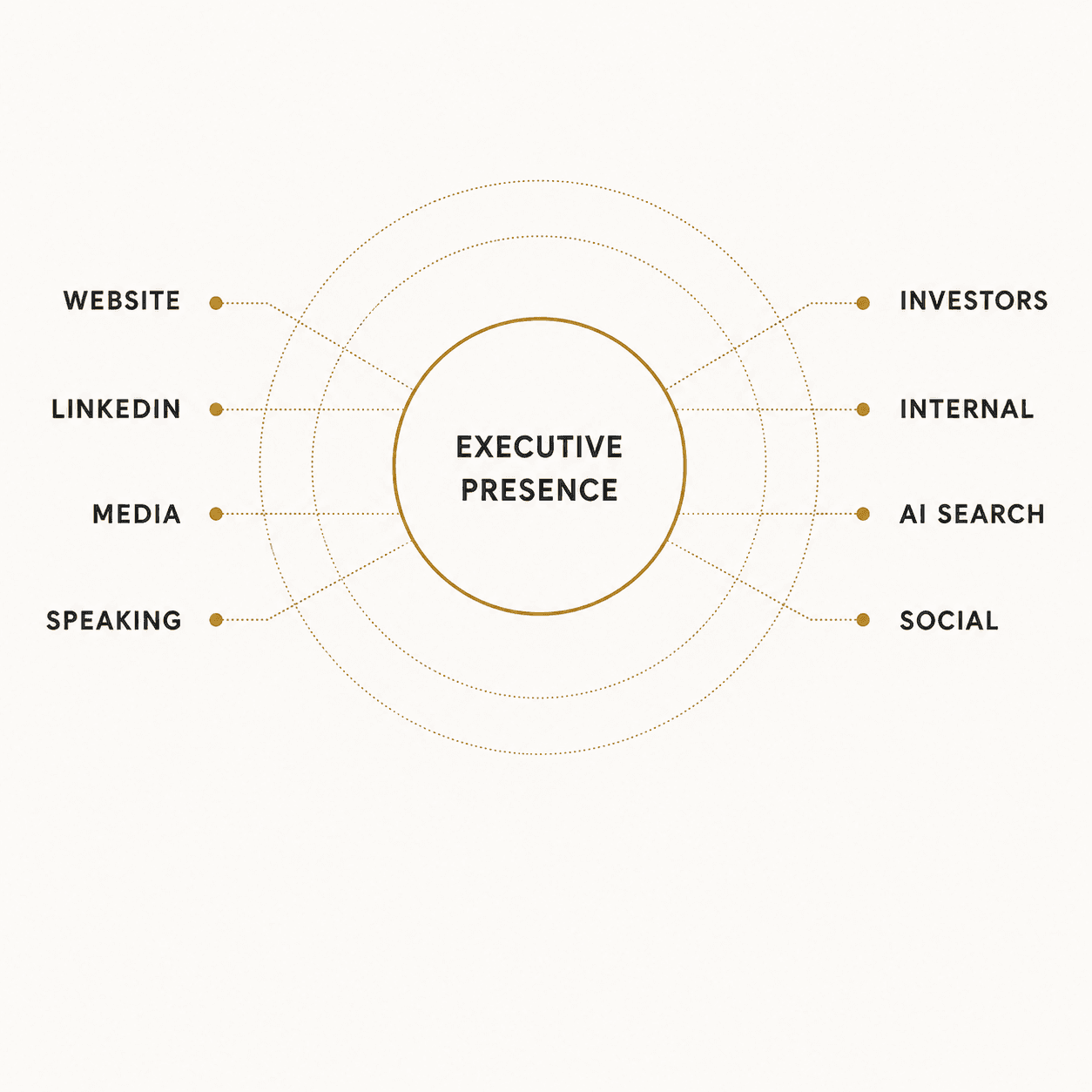
Leadership pages carry more weight than many organizations assign to them. They appear on websites, are reviewed by investors, are shared with boards, support proposals, influence recruiting, shape media interpretation and become part of how the market reads the organization. A leadership page is not separate from the company’s reputation. It is one of the places where reputation becomes visible.
If the company is premium, the page should feel premium. If the company is trusted, the page should communicate trust. If the company is mature, the page should show maturity. If the company expects confidence from the market, the leadership page should create it. This is where Executive Visual Governance matters. It brings structure to how leadership is seen. It aligns image, hierarchy, biography, tone and platform so the page communicates with one standard. Not more content. Better signal.
Leadership Presence Should Be Governed
The purpose of a leadership page is not simply to show executives. It is to make leadership immediately readable. A well-governed leadership page does not ask the audience to search for confidence. It creates it through structure. It reduces friction. It clarifies authority. It makes the organization feel aligned.
The strongest pages do not perform trust. They establish it. At executive level, presence should not be left to chance. It should not be assembled from individual preferences. It should not be treated as a final upload step after the brand and website are complete. It should be governed as part of the company’s leadership standard.
Because the audience is not only reading what leaders have done. They are reading what leadership represents now.
A leadership page is not a biography. It is a trust signal.