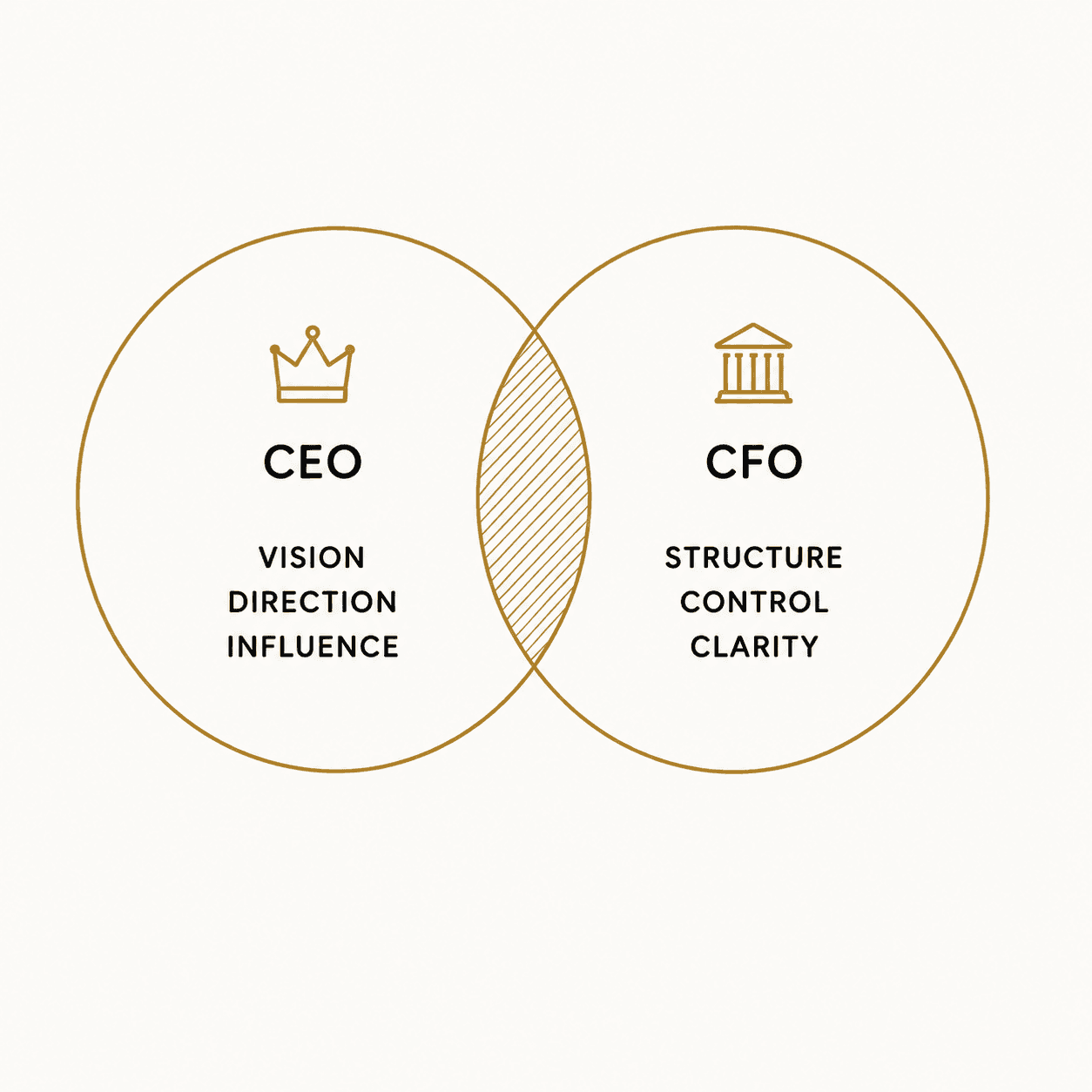
Executive presence is becoming an organizational asset.
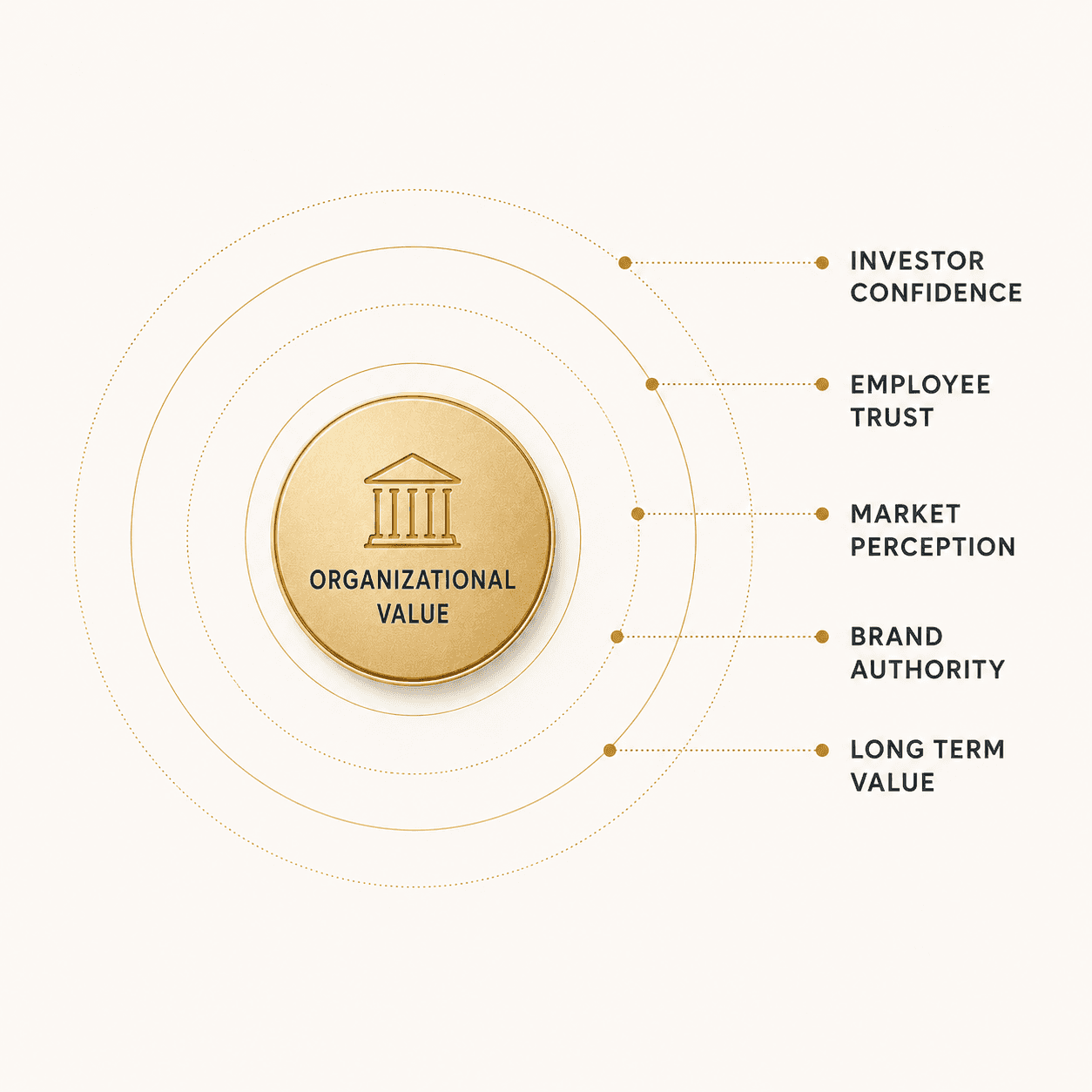
What Is Executive Presence?
Executive presence is the way leadership is seen, understood and trusted by the people interpreting an organization. It is shaped by how leaders communicate, appear, respond and show up across meetings, interviews, public platforms, investor conversations, media moments and internal visibility points.
It was once treated as a personal advantage. A leader with executive presence appeared polished, confident, articulate and influential. That definition still matters, but it is no longer sufficient. Leadership visibility now extends beyond the individual. It influences how the organization itself is read.
Investors evaluate it. Media amplifies it. Employees internalize it. Boards rely on it. Markets respond to it instinctively. This changes the role of executive presence. It is no longer only personal presentation. It is becoming part of organizational infrastructure.
Executive Presence Has Moved Beyond Personal Branding
For many years, executive presence was understood through the language of personal branding. The focus was on how one leader could appear more confident, refined or influential. The concern was individual polish: how the leader spoke, dressed, entered a room, handled pressure and projected authority.
That version of executive presence still has value. A leader must be able to carry credibility in moments where judgment is being observed. A CEO, founder, board member or senior executive must be able to communicate steadiness, readiness and trust. Personal presence helps establish that signal.
But personal presence alone does not govern the larger leadership system. A polished executive can still appear disconnected from the organization’s visual standard. A confident leader can still create inconsistency if their public presence does not align with the company’s hierarchy, tone and institutional ambition. At senior level, presence is no longer only about the individual. It is about what the individual communicates on behalf of the organization.
Executive Presence Is Now Read as a System
Modern leadership is visible in more places than ever before. Leadership pages, biographies, investor materials, board communication, media interviews, social platforms, conference appearances, internal announcements and public digital archives all contribute to how leadership is interpreted.
Each visibility point creates a signal. Together, those signals form a system. When they are aligned, the organization feels coherent. When they are fragmented, the organization can feel less controlled than it actually is.
This is why executive presence must be viewed beyond isolated moments. A leader may appear strong in a meeting but visually misaligned on the company website. A leadership team may have impressive credentials but appear uneven across biographies, public platforms and investor-facing materials. The audience may not identify every inconsistency, but they absorb the overall impression. They sense whether leadership feels aligned, mature and governed.
Personal Executive Presence
Personal executive presence is the individual expression of leadership credibility. It includes how a leader speaks, listens, responds, moves through public settings and carries authority under observation. It also includes the visual and tonal signals that shape how quickly people understand the leader’s role, judgment and level of responsibility.
For an individual executive, this presence can influence trust before performance is reviewed in detail. It can make a leader feel composed, capable and ready. It can help the audience understand whether the person represents stability, vision, authority or stewardship.
The value of personal executive presence is that it strengthens the leader’s ability to represent the organization with control. The limitation is that it cannot stand alone. If the individual signal is not connected to the wider leadership system, presence may feel polished but not strategically aligned.
Organizational Executive Presence
Organizational executive presence is the collective signal created by leadership visibility. It is how a company’s leaders appear together across the environments where trust is formed. This includes leadership pages, board materials, investor communication, client-facing platforms, media exposure and public representation.
In this context, the leadership team becomes a visible expression of institutional clarity. If executive visibility is inconsistent, the company can appear inconsistent. If leadership appears aligned, disciplined and properly structured, the organization inherits those qualities perceptually.
Organizational executive presence creates confidence before operational performance is examined. It gives investors, employees, partners and external audiences a clearer sense of who leads, how leadership is structured and whether the company appears certain of its own authority. This is where executive presence moves from personal branding into governance.
Executive Presence as Governance
When executive presence becomes governance, visibility is no longer left to individual preference or isolated production. Every appearance, platform, image, biography, interview and leadership moment is understood as part of a larger perception system.
This does not mean leaders become artificial or overly controlled. It means the organization becomes intentional about how authority, alignment, hierarchy and trust are communicated through leadership visibility. The goal is not sameness. The goal is coherence.
For sophisticated companies, this matters because perception often forms before analysis. People notice whether leaders appear aligned before they study the strategy. They sense whether communication feels disciplined before they evaluate the numbers. They interpret whether authority appears stable before they read the full biography.
When leadership visibility is governed well, the organization appears clearer, stronger and more trustworthy. When it is not governed, even strong companies can appear inconsistent or uncertain.
What Executive Presence Should Communicate
Executive presence should communicate more than polish. It should make leadership easier to understand. It should clarify role, strengthen trust, support hierarchy and reinforce the company’s standard of confidence.
At the individual level, executive presence should communicate judgment, composure and credibility. At the group level, it should communicate alignment, role distinction and continuity. At the organizational level, it should communicate governance, maturity and institutional trust.
This is the distinction many organizations miss. Executive presence is not only about whether a leader looks impressive. It is about whether leadership visibility supports the correct interpretation of the organization.
Why Executive Presence Matters Now
Leadership visibility has become continuous. A leadership page, investor deck, internal announcement, media profile, conference image or public statement can all shape how stakeholders interpret the organization. These visibility points do not operate separately. They accumulate.
When they are aligned, they create confidence. When they are not, they create noise. A company may have strong leaders, strong performance and strong strategy, but if the leadership signal is fragmented, the perception of control can weaken.
This is why executive presence now carries strategic weight. It is not adjacent to reputation. It is part of how reputation becomes visible. It is not a soft layer of leadership. It is one of the ways leadership is interpreted before the organization has the opportunity to explain itself.
Executive Presence Should Be Governed Intentionally
The future of executive presence is not more polish, more visibility or more personal branding. It is better alignment. It is a clearer standard for how leaders are seen across the platforms, materials and moments that shape trust.
Organizations that understand this will treat executive presence as part of their leadership standard. They will not leave it to chance, individual preference or last-minute production. They will govern it with the same care they bring to reputation, communication and institutional positioning.
Executive presence is the way leadership becomes visible.
At executive level, visibility should not simply appear credible. It should communicate trust, clarity and authority with intention.