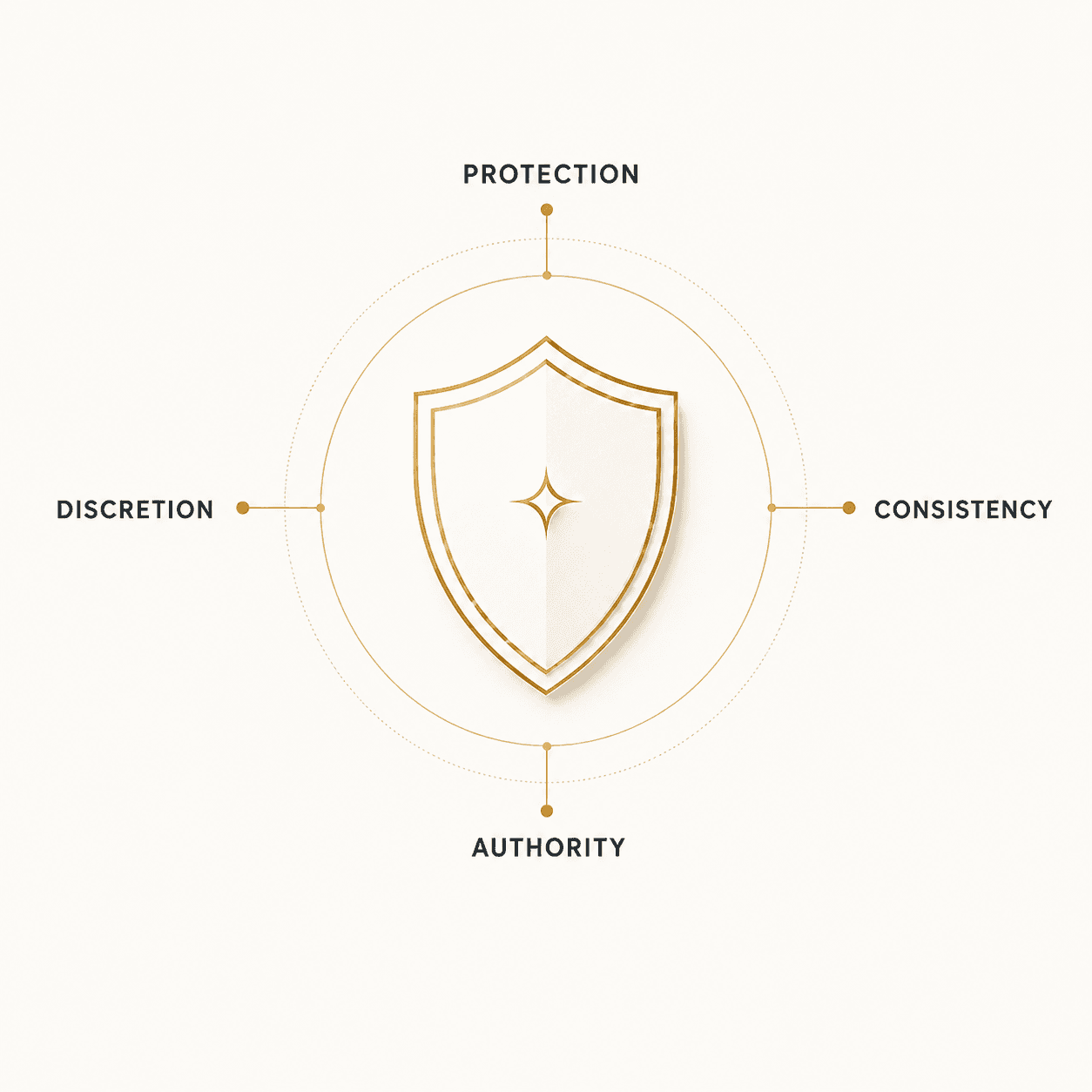
Executives lose trust faster through inconsistency than incompetence.
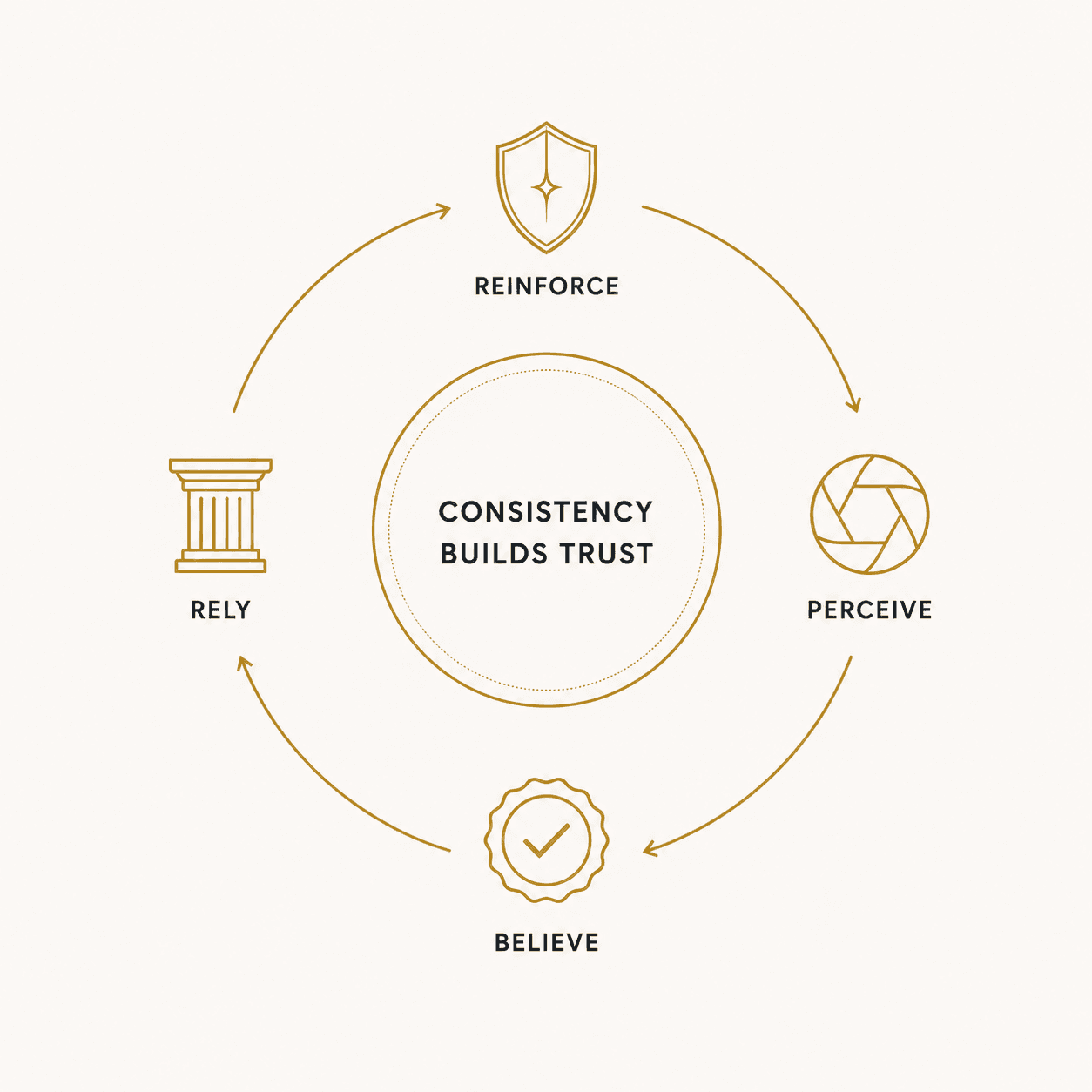
Leadership Trust Is Built Through Consistency
Leadership trust rarely disappears dramatically. More often, it weakens through accumulated inconsistency: different visibility signals, different authority levels and different versions of the same executive across platforms. Over time, stakeholders begin experiencing leadership as fragmented rather than controlled.
At executive level, coherence communicates discipline. This is why highly capable leaders can still feel strategically misaligned in public perception. The issue is not competence. It is continuity.
Trust Requires Repeated Reinforcement
Trust is not built from one strong appearance. It is built through repeated signals that confirm the same standard over time. The way a leader appears on a company website, in investor materials, across media moments and on public platforms should not feel disconnected.
Stakeholders may not study each visibility point in detail, but they absorb the pattern. They notice whether leadership feels stable, aligned and intentional. They sense when the visual and verbal signals support one another and they also sense when they do not. When leadership visibility shifts too frequently — visually, tonally or structurally — confidence weakens quietly. The leader may still appear credible in each individual setting, but the overall signal begins to lose control.
Inconsistency Creates Interpretive Noise
A leadership system becomes vulnerable when every platform tells a slightly different story. One version of the executive may appear authoritative while another appears casual. One may support hierarchy while another dilutes it. One may feel aligned with the company’s standard while another feels separate from it.
This does not always create immediate concern. It creates interpretive noise. Stakeholders are left to reconcile the differences themselves and at executive level, that friction matters. The strongest leadership presence reduces that friction. It makes authority easier to read and gives stakeholders the same essential signal across every meaningful point of visibility. The result is not repetition for its own sake. It is controlled continuity.
Leadership Systems Operate Through Precision
A strong leadership system does not depend on isolated polish. It operates through precision: controlled visibility, stable authority signaling, restrained communication systems and governed executive presentation. Nothing feels excessive, improvised or detached from the larger standard of the organization. Each visibility point reinforces the same perception with clarity.
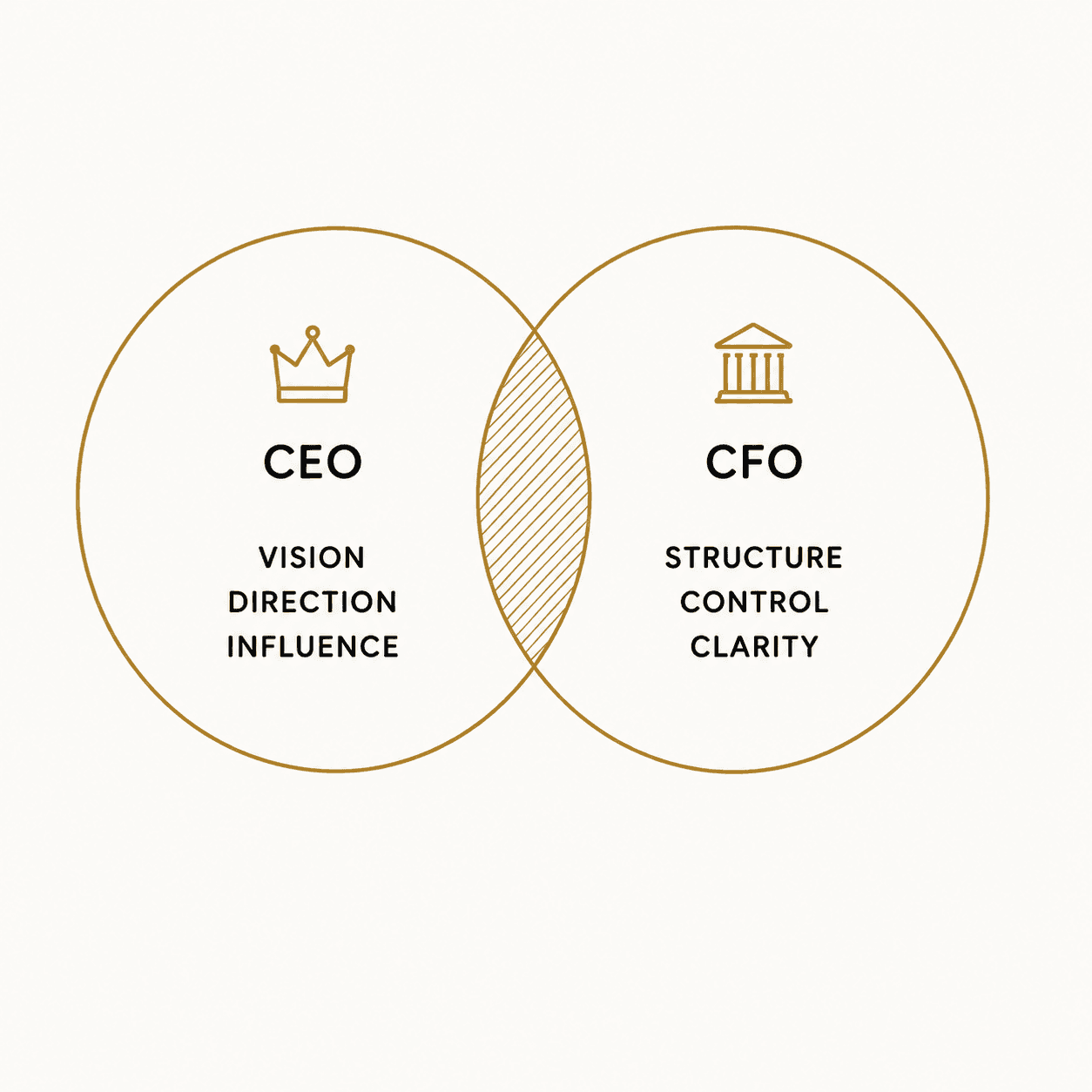
This does not mean every leader must appear identical. A CEO, founder, board member, CFO or operating executive may each require a different level of presence. The standard is not sameness. The standard is coherence. Each leader should feel distinct, but still connected to the same system of trust.
Consistency Is a Form of Control
In high-trust environments, consistency is interpreted as control. It signals that the organization understands how leadership should be seen, how authority should be presented and how public interpretation should be managed.
A consistent leadership presence makes the organization feel more disciplined. It gives the market fewer reasons to question the stability of the leadership system. It allows stakeholders to focus on substance because the presentation of leadership is not creating distraction. This is where Executive Visual Governance becomes essential. It brings structure to the repeated signals that shape trust and ensures leadership visibility is not left to preference, accident or isolated production.
The Strongest Presence Systems Are Quiet
The strongest executive presence systems are not memorable because they are loud. They are memorable because they are unmistakably consistent. They do not overstate authority, rely on excessive visibility or perform confidence. They establish it through discipline, restraint and continuity.
At executive level, trust is reinforced by what remains stable. The visual standard, the tone, the hierarchy, the role signal and the overall sense of leadership control must work together. Leadership trust is built through repetition. Not repetition of content, but repetition of standard.
When the standard is consistent, leadership feels governed.