Why executive presence is still strategically misaligned.
Why Executive Presence Is Still Strategically Misaligned
Most executive presence today is polished enough to appear credible. Very little of it is strategically aligned. That distinction matters because at executive level, polish is only the entry point. The more important question is whether leadership presence is connected to the organization’s strategy, hierarchy, trust system and market perception.
A leader can appear refined, articulate and visually credible while still communicating the wrong signal. They can look executive and still feel disconnected from the company’s larger presence. They can be visible and still weaken coherence. This is where many organizations remain exposed. The issue is not always quality. Often, it is the absence of a governed standard.
Executive Presence Is Not the Same as Strategic Presence
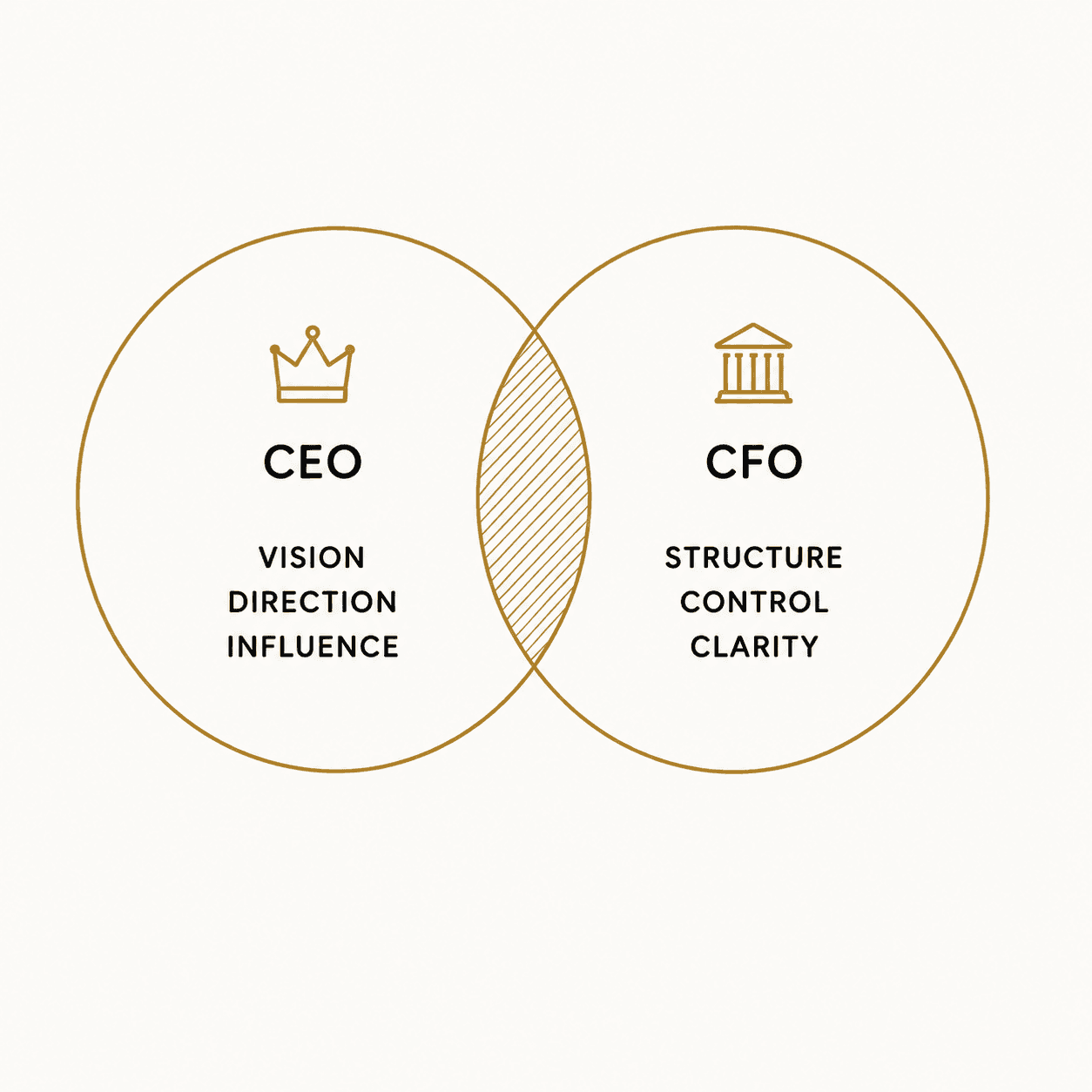
Executive presence is often treated as surface credibility. It focuses on whether a leader appears polished, prepared, articulate and appropriate for the environment. Strategic presence operates at a higher level. It asks whether leadership visibility is reinforcing the correct organizational meaning.
That difference is significant. Executive presence may satisfy the immediate moment, but strategic executive presence strengthens the larger perception system over time. It considers how every leadership appearance contributes to trust, authority, hierarchy, market interpretation and organizational clarity.
This is why a leadership team can look individually credible while the overall system still feels fragmented. Each executive may appear capable on their own, yet the organization may not communicate a unified leadership standard. The issue is not a lack of polish. It is a lack of alignment.
Executive Visibility Now Exists Across Fragmented Environments
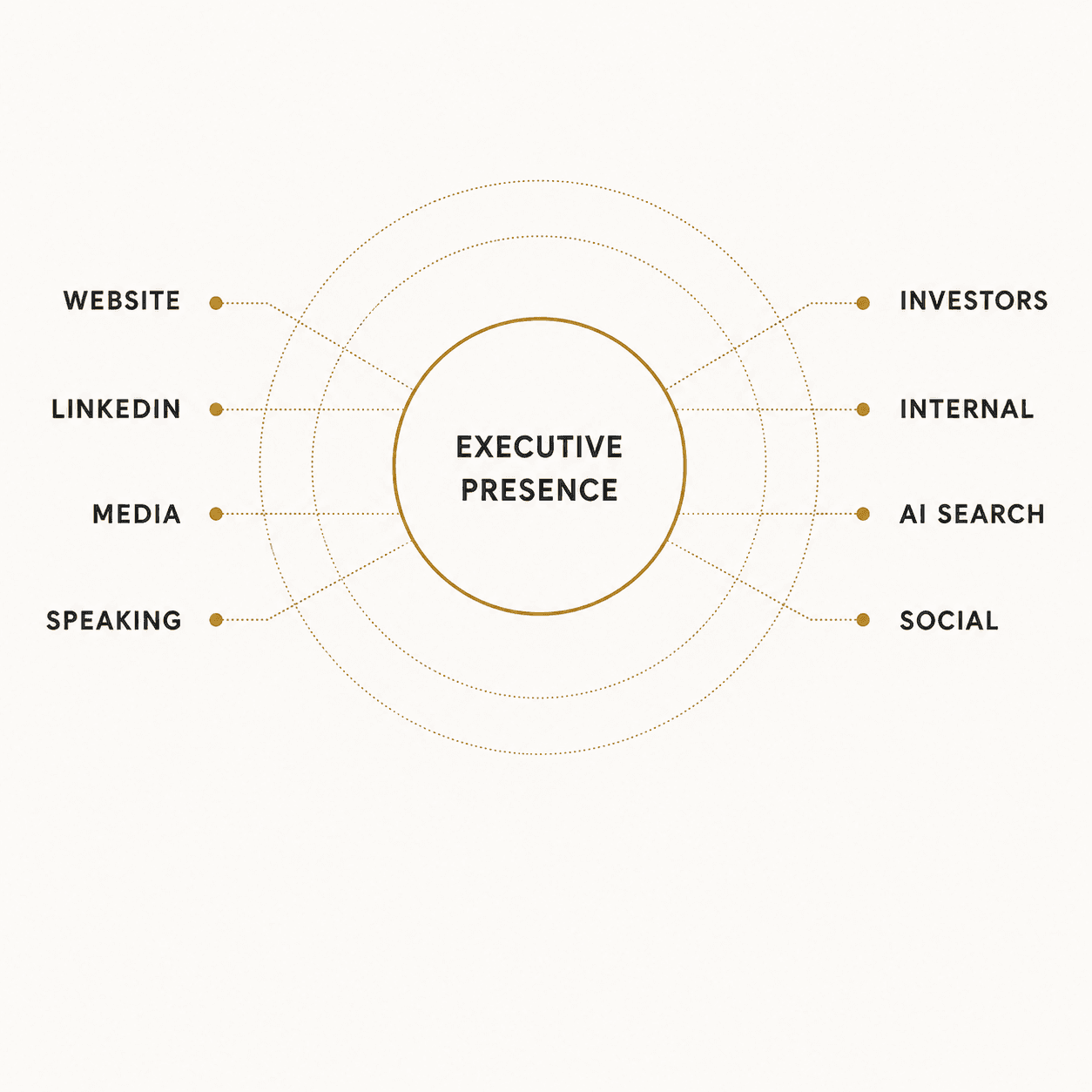
Modern leadership presence no longer lives in one controlled setting. It moves across corporate platforms, investor communications, speaking engagements, media appearances, internal systems, AI indexing, personal channels and public digital archives. Each environment shapes perception independently, and each one becomes part of how leadership is interpreted.
A website leadership image creates one signal. An investor deck creates another. A podcast appearance creates another. A LinkedIn post, conference photograph, media profile or AI-generated summary each adds another layer. Without governance, those signals begin to separate. Executives unintentionally become multiple versions of themselves across different environments.
One version may appear authoritative while another feels informal. One may support trust while another feels diluted. One may reinforce the company’s hierarchy while another creates ambiguity. The result is rarely dramatic at first. It is subtle inconsistency accumulating over time.
Misalignment Weakens Coherence Quietly
The most damaging executive visibility issues are not always obvious. They appear as uneven authority levels across platforms, conflicting leadership tone, unclear hierarchy between executives, visual systems that evolve without structure and public presence that feels refined in one place but under-governed in another.
Individually, these inconsistencies may seem minor. Collectively, they weaken organizational coherence. Stakeholders rarely isolate one image, one quote, one profile or one appearance as the source of concern. They absorb an overall sense of leadership clarity or lack of it.
Executive perception is cumulative. Every visibility point either reinforces the system or introduces noise into it. When the system is aligned, leadership feels controlled, mature and certain of its own authority. When it is not, even strong individual leaders can appear less connected to the organization they represent.
Isolated Creative Production Is an Outdated Model
Many organizations still manage executive visibility as isolated creative production: a leadership image, a press asset, a profile update, a keynote deck, a media appearance or a website refresh. Each asset may be professionally executed, but professional execution does not automatically create executive alignment.
When leadership visibility is managed asset by asset, the organization loses control over the larger leadership signal. The result is often a collection of polished pieces that do not necessarily work together. They may look professional, but they do not always communicate one standard.
The difference between production and governance is simple. Production creates individual outputs. Governance ensures each output reinforces the same strategic interpretation. At executive level, that difference is material because leadership presence is not only seen. It is compared, interpreted and remembered across platforms.
Leadership Presence Now Operates at Organizational Scale
Executive presence is no longer an aesthetic support function. It influences how the organization itself is read. Investor confidence, executive trust, market interpretation, internal stability and leadership maturity are all shaped by the consistency and clarity of leadership visibility.
Stakeholders do not only evaluate what leaders say. They evaluate whether leadership appears to hold together as a system. A fragmented executive presence can make a mature organization feel less mature. It can make a capable leadership team feel less aligned. It can make a strong strategy feel less controlled.
This is why executive presence is no longer enough on its own. At leadership level, presence must carry organizational intelligence. It must communicate not only the credibility of the individual but also the clarity of the institution behind them.
Refined Executive Systems Are Governed Through Alignment
Refined organizations do not rely on isolated polish. They operate through controlled meaning. Every visible element is calibrated to reinforce the same standard. Nothing feels accidental and nothing is allowed to drift too far from the organization’s authority. The system may evolve, but it does not fragment.
A governed leadership system does not make every executive identical. It aligns them through shared standards while preserving role distinction. It controls the level of visibility, the authority signal, the tone, the visual register and the relationship between individual presence and organizational trust.
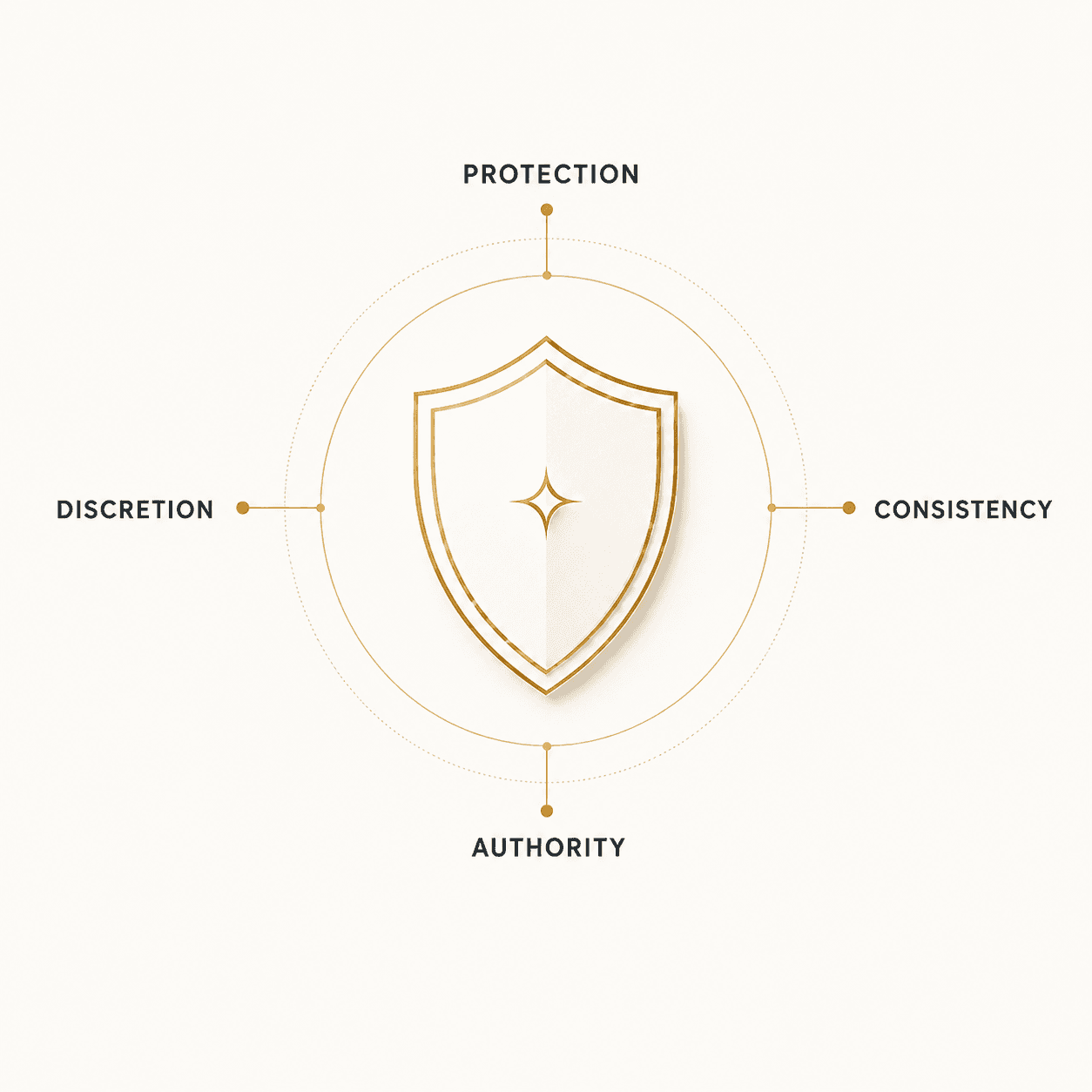
This is not about making leadership look more expensive. It is about making leadership feel more governed. When visibility is governed, perception compounds. When it is not, even polished presence can become strategically misaligned.
Strategic Alignment Must Be Intentional
Sophisticated organizations understand that leadership visibility is no longer a secondary layer of communication. It is part of how the organization establishes authority, coherence and trust in the market. Polish may create credibility in the moment, but alignment creates confidence over time.
Executive presence does not need more visibility, more polish or more content. It needs more control over what each visibility point communicates and how it connects to the larger organizational system.
Leadership presence is no longer aesthetic support. It is strategic alignment.
And at executive level, alignment must be governed intentionally.